

-
Vendor:Depot Pump
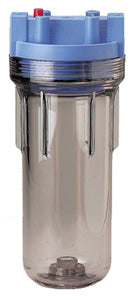
4"x10" Whole House Clear Filter Housing w/mtg bracket, wrench, and 5 Micron Sediment cartridge
Stainless Steel Insert Filter Housing Kit Features: • Slim and Large diameter styles with stainless steel threaded inserts. • Complete with full size white, powder coated steel mounting bracket, stainless steel screws, sump removal wrench and extra o-ring.- $132.91
- $132.91
- Unit price
- per
-
Vendor:Depot Pump
4"x20" Pentair Activated Carbon Water Filter Cartridge
PFGAC Series Granular Activated Carbon (GAC) Cartridges • Designed to reduce or eliminate unwanted tastes and odors such as chlorine. • Water enters the filter from the bottom and travels through the entire charcoal bed before exiting at the top. This filtration technique maximizes contact time...- $131.60
- $131.60
- Unit price
- per
-
Vendor:Depot Pump
2"x10" Whole House Sediment Clear Housing w/valve-in-head
Valve-in-Head Housing Features: • Valve-in-Head (VIH) feature closed both the inlet and outlet ports simultaneously with a half turn of the handle. • Makes cartridge change outs quick and easy. • Available in 5", 10" and 20" lengths. • Includes pressure relief button on the inlet side of...- $98.01
- $98.01
- Unit price
- per
-
Vendor:Campbell Manufacturing
1" Slip x Slip Campbell Spin Down Filter w/100 Mesh Screen
High impact, molded, non-corrosive filters with reusable polyester filter screens use centrifuge spin-down action to remove sand and other coarse sediment while maintaining full flow system.Clear bowl permits monitoring of trapped sediment. Sediment can be drained through Flush Valve (PIBV2T-R included) in bottom of...- $92.50
$0.00- $92.50
- Unit price
- per
-
Vendor:Depot Pump
2"x10" Whole House Clear Filter Housing w/3/4"SS, Mtg Bracket, Wrench, and 5 Micron Sed. Cartridge
Stainless Steel Insert Filter Housing Kit Features: • Slim and Large diameter styles with stainless steel threaded inserts. • Complete with full size white, powder coated steel mounting bracket, stainless steel screws, sump removal wrench and extra o-ring.- $64.95
- $64.95
- Unit price
- per
-
Vendor:Depot Pump
4"x10" Pentair Activated Carbon Water Filter Cartridge
PFGAC Series Granular Activated Carbon (GAC) Cartridges • Designed to reduce or eliminate unwanted tastes and odors such as chlorine. • Water enters the filter from the bottom and travels through the entire charcoal bed before exiting at the top. This filtration technique maximizes contact time...- $56.05
- $56.05
- Unit price
- per
-
Vendor:Water-Right
4"x20" 50/5 Micron Polypropylene Dual Gradient Water Filter Cartridge
The Pentair Pentek DGD-5005-20 is a 4.5" x 20" poly sediment filter is made for the Pentair Pentek Filter Housings and will fit into any 4" x 20" filter housings. The Pentair Pentek DGD Series Sediment Filters feature high dirt-holding capacity compared to similar...- $47.50
- $47.50
- Unit price
- per
-
Vendor:Water-Right
4"x20" 25/1 Micron Polypropylene Dual Gradient Water Filter Cartridge
The Pentair Pentek DGD-2501-20 is made for the Pentair Pentek Filter Housings and will fit into any 4"x 20" style filter housing. DGD Series Sediment Filters feature high dirt-holding capacity compared to similar size sediment filters. These filters will reduce sediment particles as small...- $47.50
- $47.50
- Unit price
- per
-
Vendor:Depot Pump
4"x20" 20 Micron Watts Pleated Water Filter Cartridge
EFSP Series Pleated Filter Cartridge Features: • Pleated cartridges provide increased surface area, lower pressure drop and longer service life than other cartridges. • Cellulose-free, 100% synthetic media is washable and reusable, 5 micron and up, to reduce filter costs. • Contains no binders...- $39.50
- $39.50
- Unit price
- per
-
Vendor:Depot Pump
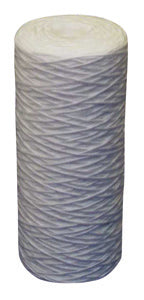
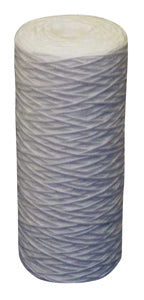
4"x10" 5 Micron String Wound Polypropylene Water Filter Cartridge
PFWP-BB Series String Wound Polypropylene Cartridges • Constructed of fibrous polypropylene over polypropylene core. Note: An antistatic agent has been used in the processing of the fibrous polypropylene and may cause some foaming in water.- $37.89
- $37.89
- Unit price
- per
-
Vendor:Depot Pump
4"x10" 5 Micron Pentair Pleated Water Filter Cartridge
PFCP Series Pleated Cellulose Polyester Cartridges • 6 sq. feet of media on standard and 16 sq.ft. on BB provide additional surface area and allow increased dirt holding capacity and low pressure drop • Ideal for high flow applications • Cartridges are encapsulated in...- $37.50
- $37.50
- Unit price
- per
-
Vendor:Depot Pump
4"x10" 30 Micron Pentair Pleated Water Filter Cartridge
PFR Series Pleated Polyester Cartridges • Excellent for water well, institutional, and light industrial applications. • Four square feet of media on standard and 20 square feet of media on BB • Pleated polyester fabric filter can be washed and reused several times. Reuse is not recommended...- $37.50
- $37.50
- Unit price
- per
-
Vendor:Depot Pump
4"x20" 20 Micron String Wound Polypropylene Water Filter Cartridge
PFWP-BB Series String Wound Polypropylene Cartridges • Constructed of fibrous polypropylene over polypropylene core. Note: An antistatic agent has been used in the processing of the fibrous polypropylene and may cause some foaming in water.- $37.32
- $37.32
- Unit price
- per
-
Vendor:Depot Pump
2"x20" 5 micron Pentair Carbon Water Filter Cartridge
PFC Series Carbon Impregnated Cellulose Cartridges • Dual-purpose cartridge provides taste/odor/chlorine reduction plus sediment filtration. • A combination of carbon and cellulose creates a dual filter used for removing fine particles and reducing unwanted tastes and odors occasionally found in tap water. • Excellent...- $35.00
- $35.00
- Unit price
- per
-
Vendor:Depot Pump
4"x10" 20 Micron Pentair Pleated Water Filter Cartridge
PFS Series Pleated Cellulose Cartridge • Used for general water filtration purposes. • This filter is comprised of four-square feet of cellulose, providing maximum surface area and strength to prolong cartridge life. • End caps fused to body assure an integral sealing area and...- $29.94
- $29.94
- Unit price
- per
-
Vendor:Water-Right
4"x10" 50/5 Micron Polypropylene Dual Gradient Water Filter Cartridge
The Pentair Pentek DGD-5005 is 10" dual grade poly sediment filter rated to filter up to 5 microns. The Pentair Pentek DGD-5005 is made for the Pentair Pentek Filter Housings and will fit into any 4" x 10" style filter housings. The Pentair Pentek...- $29.30
- $29.30
- Unit price
- per
-
Vendor:Depot Pump
4"x10" 25/1 Micron Polypropylene Dual Gradient Water Filter Cartridge
The Pentair Pentek DGD-2501 4.5" x 10" sized poly sediment filter is made for the Pentair Pentek Filter Housings and will fit into any 4"x 10" style filter housings. The Pentair Pentek DGD Series Sediment Filters feature high dirt-holding capacity compared to similar size...- $28.10
- $28.10
- Unit price
- per
-
Vendor:Depot Pump
4"x10" 30 Micron String Wound Polypropylene Water Filter Cartridge
PFWP-BB Series String Wound Polypropylene Cartridges • Constructed of fibrous polypropylene over polypropylene core. Note: An antistatic agent has been used in the processing of the fibrous polypropylene and may cause some foaming in water.- $25.15
- $25.15
- Unit price
- per
-
Vendor:Water-Right
2"x10" Pentair Activated Carbon Water Filter Cartridge
PFGAC Series Granular Activated Carbon (GAC) Cartridges • Designed to reduce or eliminate unwanted tastes and odors such as chlorine. • Water enters the filter from the bottom and travels through the entire charcoal bed before exiting at the top. This filtration technique maximizes contact time...- $22.65
- $22.65
- Unit price
- per
-
Vendor:Depot Pump
4"x10" 10 Micron String Wound Polypropylene Water Filter Cartridge
PFWP-BB Series String Wound Polypropylene Cartridges• Constructed of fibrous polypropylene over polypropylene core. Note: An antistatic agent has been used in the processing of the fibrous polypropylene and may cause some foaming in water.- $22.50
- $22.50
- Unit price
- per
Mon - Fri, 7:30am - 4:30pm
WATER FILTER CARTRIDGES
Sidebar

Learn More About WATER FILTER CARTRIDGES
Water Filter Replacement Cartridges for Well & Whole House Systems
A water filter cartridge is the replaceable media element inside a whole house filter housing that removes sediment, particles, chlorine, or other contaminants from your water supply before it reaches your fixtures. Cartridges don't last indefinitely, so replacing them on a regular schedule keeps your filtration system working as intended and protects downstream equipment, including pumps, pressure tanks, and water treatment systems, from sediment damage.
Depot Pump & Supply carries a full range of replacement water filter cartridges for well water and whole house filtration applications, including polypropylene sediment cartridges, dual-gradient polypropylene cartridges, pleated polyester and cellulose cartridges, granular activated carbon (GAC) cartridges, and carbon-impregnated cellulose cartridges. We also stock filter housings and spin-down pre-filters for complete system setups. We offer cartridges in 2"x10", 4"x10", and 4"x20" sizes from Pentair, Water-Right, and Campbell Manufacturing. For installation hardware and system components, see our Pump & Tank Accessories and Water Treatment & Accessories collections.
If you know your housing size and current cartridge spec, use the product grid above to find your replacement. If you're setting up a new system or not sure which cartridge fits your application, the selection guide below covers the key variables and please do not hesitate to contact Depot Pump for questions and product guidance.
How to Select a Replacement Water Filter Cartridge
Selecting the right replacement cartridge requires evaluating four key criteria: housing size, cartridge type, micron rating, and your specific water quality needs. These factors are distinct. For example, a cartridge that fits your housing perfectly will still fail to deliver expected results if its micron rating doesn't match your sediment levels.
- Housing Size: Cartridges must match your filter housing's diameter and length. The most common whole house sizes are 2"x10" (standard residential), 4"x10" (Big Blue 10"), and 4"x20" (Big Blue 20"). Measure your current cartridge or check your housing model before ordering. Please note, a cartridge that's even slightly off in diameter won't seal properly.
- Cartridge Type: The cartridge media determines what it removes and how long it lasts. The cartridges in this collection fall into five categories:
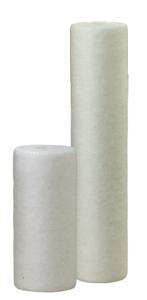
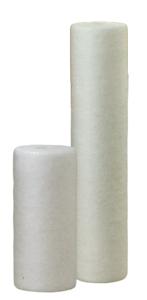
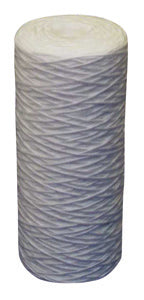
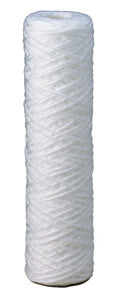
- Polypropylene string wound: depth-filtration sediment cartridges available in 5, 10, 20, and 30 micron. Cost-effective, single-use, and well-suited for moderate well sediment loads.
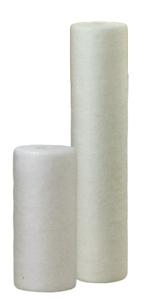
- Polypropylene dual gradient (Pentair Pentek DGD Series): wound with two micron layers (50/5 or 25/1) in a single cartridge. The graded construction captures large particles in the outer layer before finer sediment reaches the inner core, giving significantly higher dirt-holding capacity than single-rating cartridges. The preferred choice for high-sediment well applications.
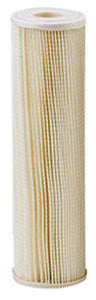
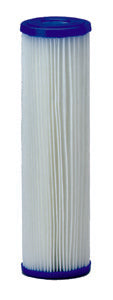
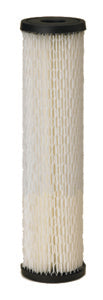
- Pleated polyester and cellulose (Pentair): greater surface area than wound cartridges of the same size, resulting in lower pressure drop and longer service life. Polyester pleated models are washable and reusable. Available in 5, 20, and 30 micron.
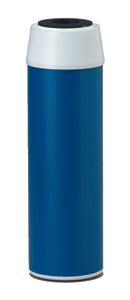
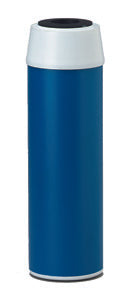
- Granular activated carbon / GAC (Pentair): adsorbs chlorine and compounds causing taste and odor issues. Not a sediment filter and typically installed downstream of a sediment cartridge in a multi-stage setup, or used on municipal water supplies where chlorine is the primary concern.
- Carbon-impregnated cellulose (Pentair PFC Series): a single-stage dual-purpose option combining sediment filtration and taste/odor reduction. Best suited for lower-flow or point-of-use applications rather than high-demand whole house systems.
- Micron Rating: Micron rating indicates the smallest particle size the cartridge captures. Lower numbers filter more finely. For example, a 1-micron cartridge captures particles that a 30-micron cartridge passes through. Well water with high sediment loads often benefits from staged filtration as a coarser cartridge (20–50 micron) upstream removes bulk sediment, and a finer cartridge (1–5 micron) downstream polishes the water before it enters the home.
- Water Quality Concern: Are you filtering sediment, sand, and particles? Or, looking to address taste, odor, and chlorine? Polypropylene and pleated cartridges handle sediment, while carbon cartridges address taste and odor. Conversely, a dual-purpose carbon/cellulose cartridge does both at lower flow rates. Matching the cartridge type to your actual water problem determines whether you see a meaningful improvement.
Frequently Asked Questions About Water Filter Cartridges
How often should I replace my water filter cartridge?
Replacement frequency depends on your water quality, flow rate, and the cartridge type. As a general guideline, replace sediment cartridges in well water applications every 3 to 6 months, or more often if your well has high sediment, iron, or clay content. Carbon cartridges are generally replaced every 6 to 12 months. The most reliable indicator is pressure drop. If you notice reduced flow or pressure at fixtures downstream of the filter, the cartridge is restricting flow and needs replacement. Don't wait for visible discoloration because a cartridge can be fully loaded with fine particles while still appearing clean.
What micron rating do I need for well water?
For most residential well water applications, a 5-micron cartridge handles fine sediment effectively and is the most common rating for whole house well filtration. If your well has heavier sand or particulate issues, start with a 20- or 30-micron cartridge to capture bulk sediment and extend the life of a finer downstream stage. If you're running a UV system for disinfection, the UV manufacturer will specify a pre-filter micron rating (typically 5 microns or finer) to ensure particles don't shield bacteria from the UV light. Check your UV bulb system's requirements before selecting a cartridge for that application.
What is the difference between a polypropylene and a pleated cartridge?
Both types filter sediment, but they do it differently and have different service characteristics. Polypropylene string wound and dual gradient cartridges use depth filtration where particles are captured throughout the thickness of the wound media. They're generally less expensive per cartridge but are single-use and need to be replaced when spent. Pleated cartridges use a folded media that provides more surface area in the same footprint, resulting in lower pressure drop and longer service life. Polyester pleated models are also washable and reusable, which reduces long-term cost in lower-sediment applications. For high-sediment well water, polypropylene dual gradient cartridges typically hold more dirt before restriction becomes an issue. For clean water with occasional fine particles, pleated cartridges last longer between changes.
What does "dual gradient" mean on a polypropylene filter cartridge?
A dual gradient cartridge, such as the Pentair Pentek DGD Series, is wound with two different micron densities in a single cartridge. The cartridge includes a looser outer layer that captures large particles first, along with a tighter inner core that removes fine sediment as water moves toward the center. This graded construction prevents the outer surface from loading quickly with finer particles by allowing them to pass through to the inner core.The result is higher total dirt-holding capacity and a longer effective service life compared to a single-micron cartridge of the same size. The DGD-5005 (50/5 micron) and DGD-2501 (25/1 micron) are available in both 4"x10" and 4"x20" sizes.
Will any cartridge fit my existing filter housing?
No, cartridges are sized to specific housing dimensions. For example, a 4"x10" cartridge fits a 4"x10" (Big Blue 10") housing, and a 4"x20" cartridge fits a 4"x20" (Big Blue 20") housing. The nominal diameter must match your housing's sump interior. Most Big Blue-style housings from Pentair and compatible manufacturers accept standard 4.5"-diameter cartridges. If you're unsure of your housing model, measure the length and diameter of your current cartridge before ordering. If you need help confirming compatibility, call us at 1-800-252-6665.
Do I need a separate carbon cartridge if I'm on well water?
Well water doesn't typically contain chlorine, so a granular activated carbon cartridge, which is primarily designed to reduce chlorine and associated taste/odor compounds, is less commonly needed for private well applications than for municipal water. If your well water has a sulfur or organic odor, a carbon cartridge may help, but the source of the odor should be identified first because carbon filtration treats a symptom, not the underlying water quality issue. For well water, sediment filtration is the baseline requirement and carbon filtration is additive based on your specific water test results.
What is a spin-down filter and do I need one?
A spin-down filter is a reusable in-line pre-filter installed upstream of your main cartridge housing. It uses centrifugal force to spin sand, grit, and coarse sediment out of the water stream before it reaches your primary cartridge. Because it captures large particles that would otherwise load your cartridge quickly, a spin-down pre-filter significantly extends the life of your downstream cartridges in wells with sand or high particulate output. The Campbell spin-down unit in this collection includes a flush valve that lets you drain collected sediment without removing the filter from the line. To start, check the clear bowl periodically to monitor what your well is producing.
How do I know when my cartridge needs to be replaced?
The clearest signal is a drop in water pressure or flow rate at fixtures downstream of the filter. A pressure gauge installed before and after the filter housing makes this easy to monitor. For reference, a differential of 10 PSI or more typically indicates a cartridge that needs replacement. If you don't have gauges, a noticeable reduction in shower pressure or faucet flow is a reliable practical indicator. Some homeowners replace cartridges on a fixed schedule (every 3, 6, or 12 months depending on water quality) to avoid service disruption. For high-sediment wells, scheduled replacement is more predictable than monitoring by feel.
Not sure what water filter is right for your system?
Call our team at 1-800-252-6665 or contact us! We've been helping contractors and homeowners size well systems and water filters since 1965 and can walk you through the selection.
- Choosing a selection results in a full page refresh.
